

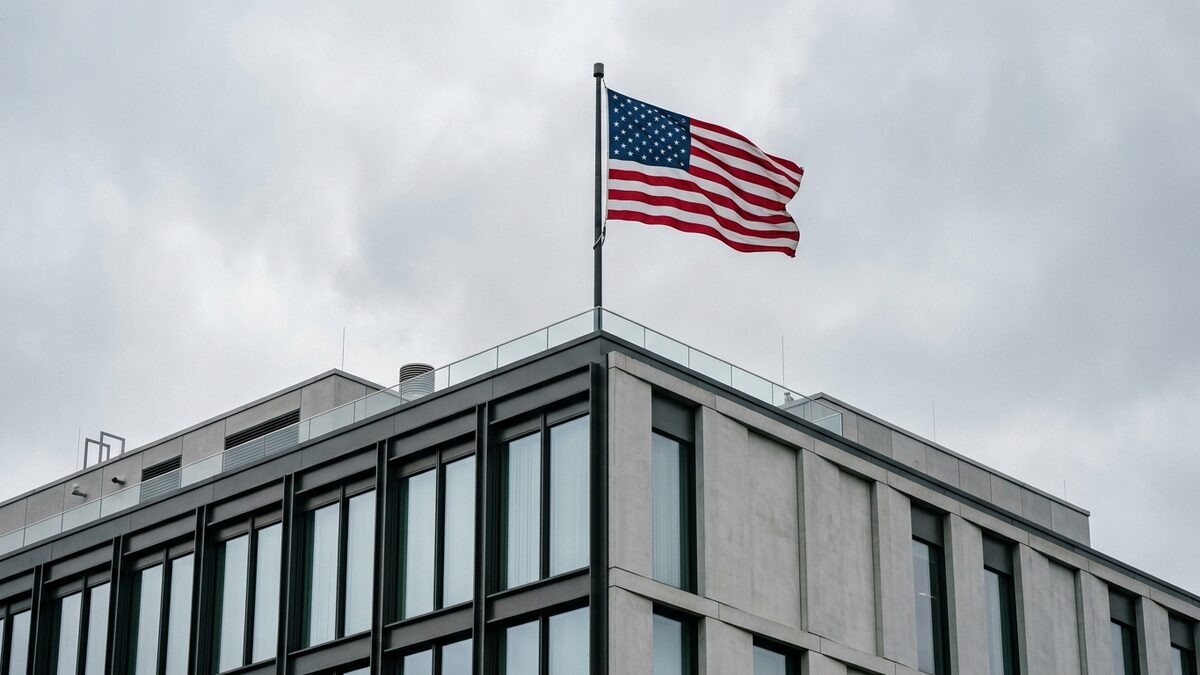
The recent implementation of the “One Flag Policy” by the U.S. State Department represents a dramatic shift in diplomatic protocol, limiting flag displays at over 270 embassies and consulates exclusively to the American flag. This policy underscores a renewed emphasis on national symbolism amid escalating geopolitical tensions and a redefined approach to international representation. The implications of this change raise important questions about its impact on diplomatic relations and global perceptions of American identity.
Key Takeaways
- U.S. embassies and consulates must now display only the American flag under the new "One Flag Policy."
- This policy marks the most significant change in diplomatic flag protocol in decades.
- The change reflects a stronger focus on national symbolism amid increasing geopolitical tensions.
- The directive applies immediately to all State Department properties worldwide.
Over 270 U.S. embassies and consulates worldwide have been ordered to remove all flags except the American flag, marking the most extensive revision in diplomatic flag protocol in decades. This policy shift, implemented abruptly, restricts the display of foreign or organizational flags on U.S. diplomatic properties, signaling a tightened emphasis on national symbolism amid rising geopolitical tensions.
Policy Change: Introduction of the “One Flag Policy”
The U.S. State Department has instituted a new directive known as the “One Flag Policy,” mandating that only the American flag be displayed on U.S. government properties both domestically and abroad. This measure, reported initially by the Washington Free Beacon and subsequently confirmed by multiple outlets, represents a significant departure from previous practices that allowed a broader range of flags, including those of foreign governments and various organizational emblems. The policy is effective immediately and applies to all State Department facilities, including embassies, consulates, and other diplomatic posts.
This policy shift, implemented abruptly, restricts the display of foreign or organizational flags on U.S. diplomatic properties, signaling a tightened emphasis on national symbolism amid rising geopolitical tensions.
The directive underscores a deliberate shift in the visual representation of American government presence, emphasizing a singular national symbol amid a global context marked by intensifying geopolitical competition. By limiting flag displays to the American flag, the administration signals a reinforced assertion of U.S. sovereignty and identity at its foreign missions, aligning with broader nationalist policy trends observed during the current administration.
Scope and Implementation at Embassies and Consulates
The “One Flag Policy” explicitly encompasses over 270 overseas U.S. embassies, consulates, and additional diplomatic facilities, as well as domestic State Department offices. Reports indicate that on embassy compounds, the American flag must be the sole flag flown on the main flagpole, a space traditionally used to display multiple flags, including those of host nations and allied organizations. The policy extends beyond physical flagpoles to restrict other government-sanctioned flag displays and related content on official premises.
Implementation instructions have been disseminated to ensure uniform compliance across all affected facilities. This comprehensive enforcement suggests a strategic effort to standardize the symbolic environment of U.S. diplomatic missions worldwide, minimizing visual elements that could suggest partnerships or affiliations beyond the United States. The policy’s broad scope and immediate enactment reflect the administration’s priority in reinforcing a clear and consistent national image abroad.
Permitted Exceptions and Prohibited Flags
While the “One Flag Policy” restricts the display of all flags except the American flag, limited exceptions remain in place. The most consistently reported allowed exceptions are the POW/MIA emblem and, in some accounts, the Wrongful Detainees flag. These exceptions reflect longstanding U.S. commitments to honoring military personnel and addressing specific detainee issues. However, other previously permitted flags, including Pride flags and Black Lives Matter flags, are now explicitly banned from being displayed on the main flagpole at diplomatic sites.
Prior State Department guidelines allowed for certain flags and symbols to be flown under specific authorizations, but the new policy narrows this allowance considerably. While some flags may still be displayed in areas other than the main flagpole, the directive clearly limits their official visibility and prominence. This shift signals a move away from more inclusive or issue-based flag displays toward a stricter, uniform presentation centered solely on the American flag, reducing the symbolic complexity of U.S. diplomatic spaces.