

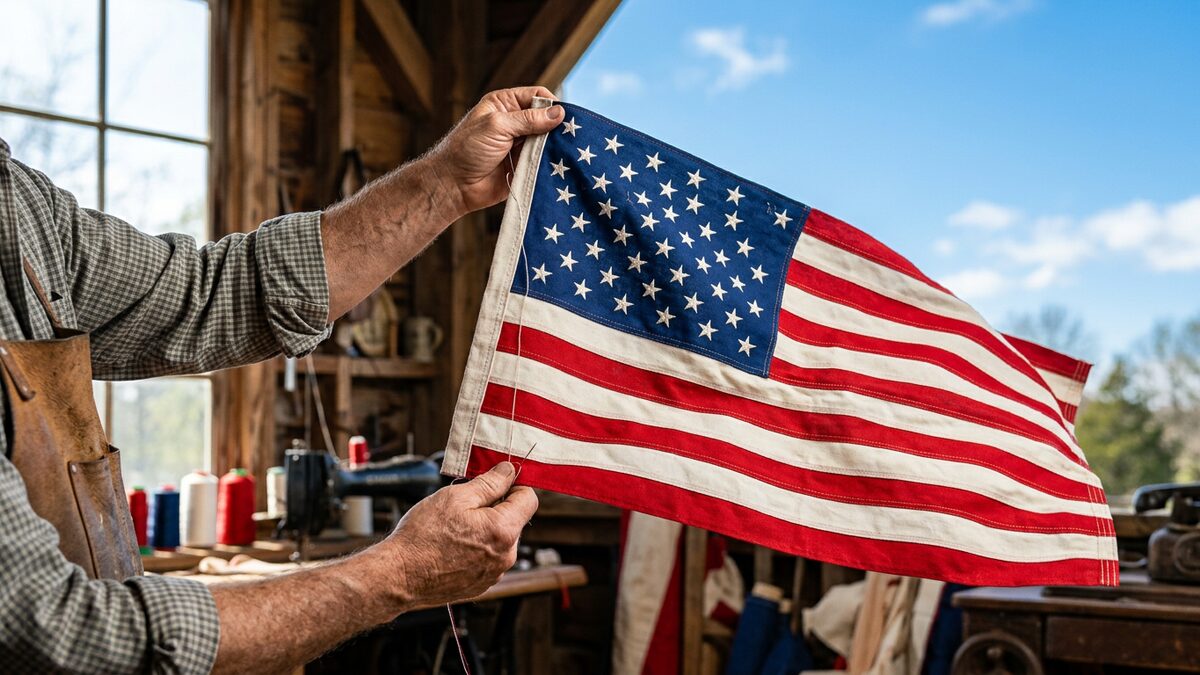
The recent legislation in Minnesota mandating the purchase of American-made flags has sparked a significant shift in the national conversation about patriotism and economic priorities. With nearly 70 percent of flags currently imported, this law challenges longstanding supply chain practices and raises important questions about supporting domestic manufacturing. This development invites a closer examination of the broader implications for retailers, government agencies, and consumers across the country.
Key Takeaways
- Nearly 70 percent of American flags displayed in the U.S. are imported rather than domestically made.
- Minnesota's law requires state agencies to buy only American-made flags, setting a legal precedent.
- The law prohibits retailers in Minnesota from selling American flags not made in the U.S., impacting commerce.
- This legislation has sparked a national debate on patriotism, supply chain integrity, and economic nationalism.
Nearly 70 percent of the American flags displayed across the United States are currently imported, a figure that has galvanized renewed efforts to promote domestically manufactured flags. This surge in activism follows Minnesota’s enactment of a landmark law mandating state agencies to purchase only American-made flags, sparking a broader national debate on patriotism, supply chain integrity, and economic nationalism.
Minnesota’s Flag Law as the Legal Catalyst
The renewed push to buy American-made flags finds its legal foundation in Minnesota Statutes § 325E.65, a statute titled “Sale of American flags.” This law prohibits retailers in Minnesota from selling or offering American flags unless they are manufactured within the United States. The statute, enacted to ensure that flags sold within the state represent genuine American craftsmanship, has become the authoritative source driving current advocacy efforts. It has also led some retailers and advertisers to explicitly mark flag products as “Not available in MN,” underscoring the statute’s practical impact on commerce and consumer choice within the state.
Nearly 70 percent of the American flags displayed across the United States are currently imported, a figure that has galvanized renewed efforts to promote domestically manufactured flags.
The Minnesota State Law Library provides extensive resources and related legal materials on flag laws, further emphasizing the statute’s significance. As the core legal trigger, this law has elevated the issue of sourcing flags domestically from a niche policy matter to a topic of national discourse, involving questions of patriotism and economic sovereignty.
Historical Context and Legislative Timeline
Minnesota’s flag law was passed during the 2007 legislative session as part of the state budget act and took effect on January 1, 2008. This timeline is critical to understanding the contemporary momentum around the push to buy American-made flags—it is not a new policy idea but rather a revival of interest in a regulation that has been in place for over a decade. Early reports contemporaneous with the law’s passage described its enforcement as imminent, with retailers and state agencies required to comply by the end of 2007.
The law’s longevity highlights that the current surge in activism is rooted in a reassessment and expansion of Minnesota’s precedent. While the statute initially targeted the state’s market and government procurement, its influence now extends into a broader national conversation about the ethics of flag sourcing, supply chain security, and the symbolic value of American-made products in an era of global trade complexities.
Enforcement and Penalties Under Minnesota Law
The Minnesota statute itself does not explicitly specify penalties for violations, but enforcement is governed by the state’s default misdemeanor provisions. Secondary sources consistently report that breaches of the flag sale restrictions can result in misdemeanor charges carrying penalties of up to a $1,000 fine and 90 days in jail. This enforcement framework aligns with Minnesota’s general approach to statutory violations where specific sanctions are not detailed within the statute text.
These potential penalties underscore the seriousness with which Minnesota treats the sale of American flags. The threat of misdemeanor charges serves as a significant deterrent to retailers considering non-compliance. Moreover, this enforcement mechanism has added weight to the push to buy American-made flags, reinforcing the law’s role as a model for other states contemplating similar measures to bolster domestic manufacturing and symbolize national pride through authentic American flags.