

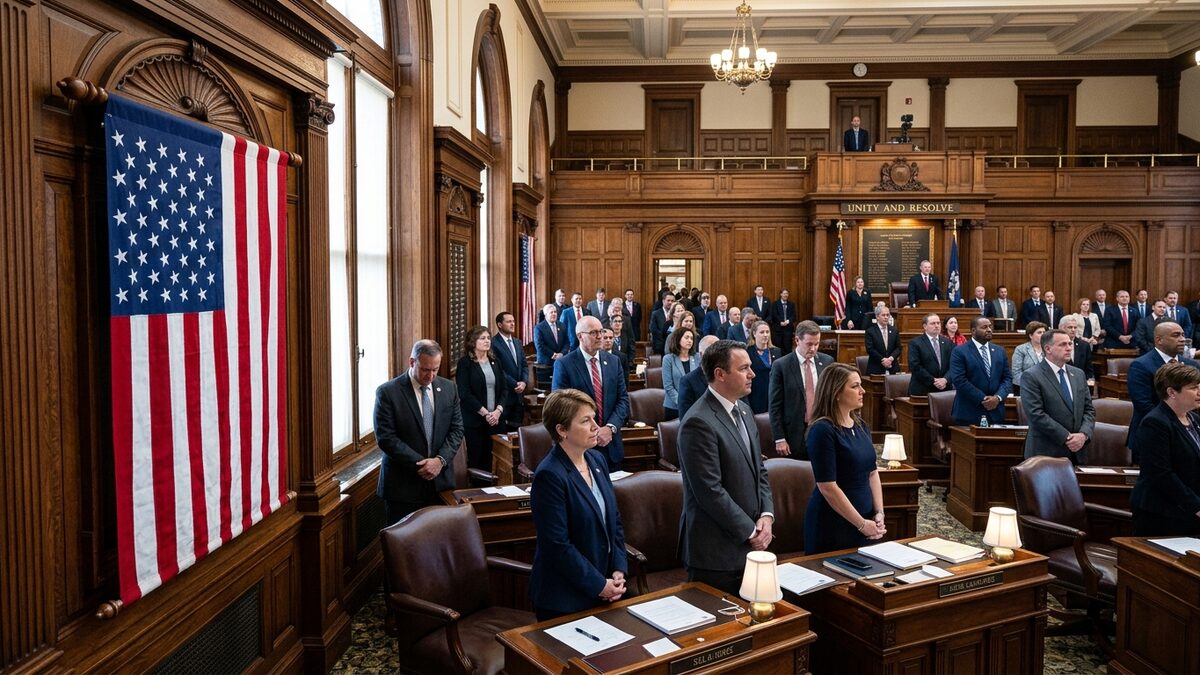
Recent legislative efforts seek to establish consistent standards for displaying the U.S. flag at public events, reflecting a broader push to enhance national unity and respect. By addressing varied practices across states and municipalities, these proposals aim to reinforce the symbolic significance of the flag during official ceremonies. The discussion raises important questions about balancing tradition, legal frameworks, and public sentiment in shaping these new guidelines.
Key Takeaways
- Lawmakers have proposed new measures to standardize U.S. flag display protocols at public events.
- The U.S. Flag Code currently mandates respectful and uniform flag display practices nationwide.
- The proposed regulations aim to address inconsistencies in flag handling across different states and municipalities.
- The goal of these measures is to reinforce national unity and symbolic reverence during official ceremonies.
What message does the display of the U.S. flag at public events convey about national unity and respect? In response to ongoing debates over flag protocol and patriotism, lawmakers have introduced new measures aimed at standardizing how the flag is presented during official ceremonies and gatherings. These proposed regulations seek to reinforce symbolic reverence while addressing inconsistencies in flag handling across states and municipalities.
Existing Federal Requirements Under the U.S. Flag Code
The federal U.S. Flag Code sets foundational guidelines for the display of the American flag, emphasizing respect and uniformity. According to 4 U.S. Code § 6, the flag should be displayed from sunrise to sunset unless it is properly illuminated during nighttime. The Code mandates its presence on public institutions, polling places on election days, and schools during school days. It also identifies specific occasions for flag display, such as Flag Day on June 14, Independence Day on July 4, and Veterans Day on November 11. Traditional protocol requires the flag to be raised briskly and lowered ceremoniously, reinforcing the solemnity of these acts.
These proposed regulations seek to reinforce symbolic reverence while addressing inconsistencies in flag handling across states and municipalities.
Core Respect and Positioning Protocols
The Flag Code outlines several respect-based rules regarding flag positioning. Notably, the flag must never be dipped to any person or object, a gesture permissible for other flags but prohibited for the U.S. flag. Displaying the flag upside down is forbidden except as a distress signal in extreme danger. Moreover, the flag should not touch the ground, floor, water, or any merchandise beneath it, nor should it be carried flat or horizontally except in limited ceremonial contexts, such as military or patriotic events. When displayed alongside other flags, the U.S. flag must occupy the position of honor, typically the top or most prominent place, underscoring its symbolic precedence.
Lawmakers’ Efforts to Strengthen Public Event Display Standards
Current legislative efforts focus on enhancing the visibility and consistency of U.S. flag display at public events rather than altering the fundamental provisions of the Flag Code. Lawmakers propose standardized practices that would ensure the flag’s proper presentation across all states and municipalities during official ceremonies, aiming to eliminate variations that have led to public confusion and occasional disrespect. The baseline for these proposals builds on existing legal requirements for public institutions, schools, and polling places, seeking to extend and enforce these standards more rigorously at a broader range of public gatherings.
These initiatives come amid a broader context of flag-related legislation, including the Flag Protection Act of 1989, which Congress enacted following a Supreme Court decision that invalidated state-level flag-burning statutes. The current proposals aim to balance symbolic reverence with constitutional protections, focusing on display standards rather than punitive measures. By doing so, lawmakers hope to foster greater national unity and respect through more consistent and visible adherence to flag protocols at public events nationwide.