

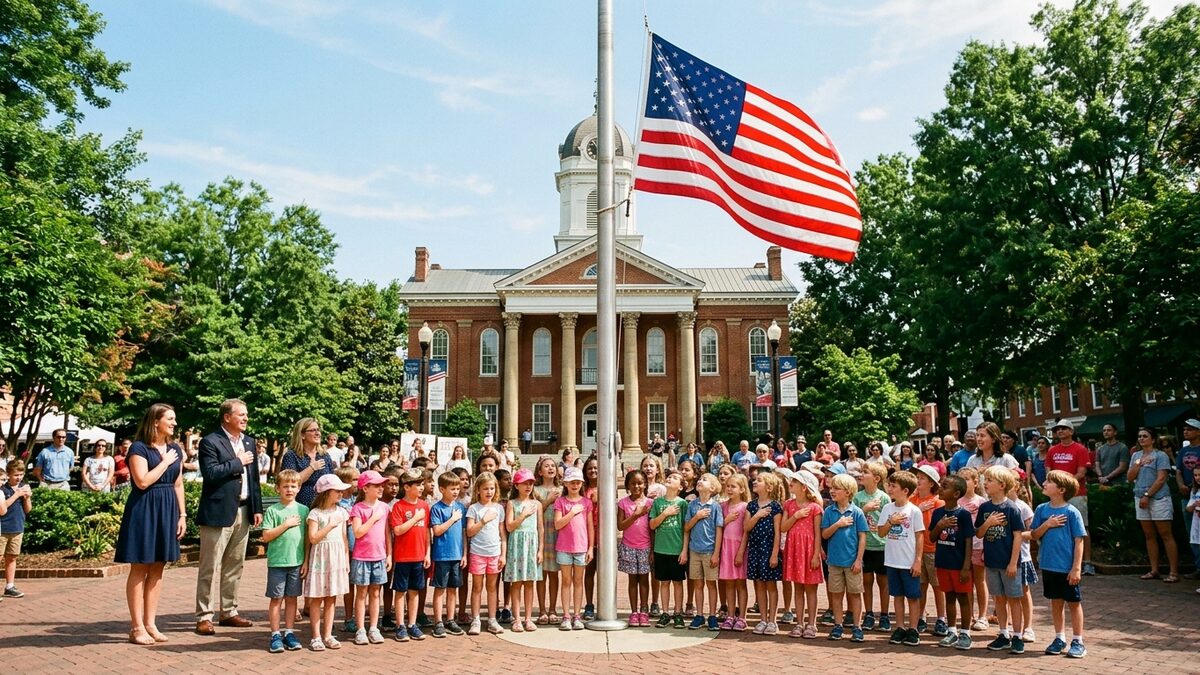
A growing number of schools, courthouses, and city halls across the nation are reinstating flag ceremonies, highlighting a renewed emphasis on patriotism as summer approaches. This movement, exemplified by a small Ohio town’s fifth-graders participating in solemn flag-raising rituals, underscores a collective effort to honor national symbols and cultivate unity. Exploring how these practices align with the U.S. Flag Code offers insight into their significance in fostering community spirit.
Key Takeaways
- Flag ceremonies are becoming more common in schools, courthouses, and city halls to promote national pride.
- The U.S. Flag Code mandates daily display of the American flag at public institutions, guiding these ceremonies.
- These ceremonies serve as moments of unity and reflection, especially among students.
- The rise in flag ceremonies corresponds with a broader increase in summer patriotism nationwide.
In a quiet town in Ohio, a group of fifth-graders stood solemnly in the school gymnasium as the principal raised the American flag, their voices joining in a heartfelt rendition of the national anthem. For many, this simple morning ritual had become a powerful moment of unity and reflection, sparking renewed interest in patriotism as summer approached. Across the country, schools, courthouses, and city halls are increasingly adopting flag ceremonies to foster a sense of national pride amid a growing wave of summer patriotism.
Federal Flag Code Shapes Ceremony Practices
The resurgence of flag ceremonies at schools, courthouses, and city halls aligns closely with the guidelines set forth in the U.S. Flag Code. This federal code mandates that the American flag be displayed every day, especially at locations such as schools, public institutions, and polling places. Specifically, it requires that the flag be shown during school days in or near every schoolhouse and daily on or near the main administration building of every public institution. These rules provide a clear framework for the recent increase in formal flag-raising ceremonies.
For many, this simple morning ritual had become a powerful moment of unity and reflection, sparking renewed interest in patriotism as summer approached.
Moreover, the Flag Code stipulates that the flag should be flown from sunrise to sunset unless properly illuminated at night. It also prescribes that the flag must be hoisted briskly and lowered ceremoniously, establishing the procedural basis for many communities’ flag ceremonies. These protocols promote respect and uniformity in how the flag is handled, reinforcing the ritual’s significance as an expression of patriotism.
Illinois Law Reinforces Flag Display at Civic Buildings
In Illinois, the Flag Display Act codifies the requirement for flying the American flag at various public locations, including county courthouses, schools, and municipal buildings. This state law mandates flag display at county courthouses, state prisons, charitable institutions, and all public schools. Additionally, city or village halls, village squares, and public parks fall under the statute’s coverage. This legal framework reflects a commitment to ensuring that public spaces visibly honor the national symbol.
The Act, organized under 5 ILCS 465, demonstrates that flag display is not merely a local tradition but a state-mandated responsibility. The law’s comprehensive scope underscores how state policies can shape civic practices, encouraging municipalities and educational institutions to incorporate flag ceremonies into their daily or event-based routines.
Standardized Protocols Foster Community and Patriotism
Flag ceremony protocols are often tied to community, school, or government events and follow standardized guidance to ensure consistency and respect. For example, the Girl Scouts’ official materials describe flag ceremonies as appropriate for opening or closing meetings and special events, whether held in meeting rooms, outdoor spaces, auditoriums, or on stage. These ceremonies serve as a tool to foster a patriotic spirit among young participants and community members alike.
The protocol emphasizes raising the flag to the peak before lowering it, a practice that symbolizes honor and reverence. By adhering to these procedures, schools, courthouses, and city halls create meaningful moments of reflection and national pride. The renewed interest in flag ceremonies during the summer months highlights their role in uniting communities and reinforcing shared values through a simple yet powerful ritual.