

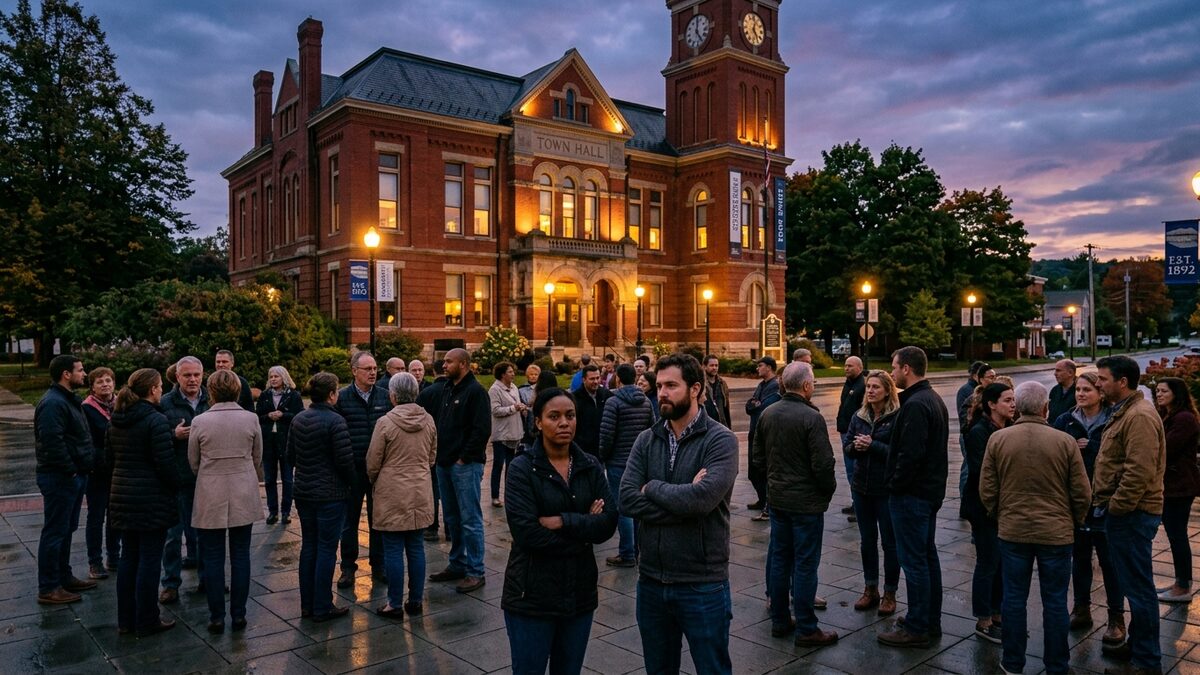
Saline County’s decision to retract its proposed county flag following prolonged public opposition highlights the complexities of balancing heritage representation with community sentiment. Initiated by Justice of the Peace Keith Kellum, the flag’s design intended to unify residents but instead exposed deep divisions over symbolism and identity. This development raises important questions about the challenges local governments face when addressing collective pride amid diverse perspectives.
Key Takeaways
- Saline County officials dropped their plan to adopt a new county flag after months of public protests.
- The proposed flag design aimed to represent local heritage but sparked debates over symbolism and community identity.
- The flag initiative began in spring 2026, led by a local Justice of the Peace to boost county pride.
- Community involvement shaped the design, but controversy ultimately led to the plan’s withdrawal to ease tensions.
What message does a county flag truly send when it sparks months of public outcry and division? Saline County officials have abandoned their plan to adopt a new county flag following sustained protests and widespread civic backlash. The proposed design, intended to represent local heritage, instead ignited debates over symbolism and community identity, leading to its withdrawal in an effort to quell tensions.
Origins of the County Flag Proposal
The effort to create an official flag for Saline County began in the spring of 2026, initiated during a Public Works and Safety Committee meeting on April 6. The proposal was championed by Keith Kellum, Justice of the Peace for District 4, who sponsored the resolution as a means to foster county pride and identity. The flag design was selected through a community contest, reflecting an attempt to involve local residents in the creation process. Key elements included stars symbolizing the incorporated cities within the county and imagery featuring the courthouse bell tower, intended to signify local heritage and governance.
Saline County officials have abandoned their plan to adopt a new county flag following sustained protests and widespread civic backlash.
Despite these symbolic intentions, discussions during the committee meeting revealed early concerns regarding the allocation of public funds for the flag’s production. The initiative was positioned as largely symbolic rather than a significant expenditure, although cost and practicality remained points of contention among some committee members.
Advancement and Initial Institutional Support
On April 20, 2026, the flag proposal advanced beyond the committee stage when the Public Works and Safety Committee voted to send the resolution to the full Saline County Quorum Court. The committee vote reportedly stood at eight in favor, four against, and one member absent, indicating a majority endorsement within the committee despite dissenting voices. This progression suggested that, at that point, the proposal retained substantial institutional support as a county identity project.
Supporters emphasized the flag’s role in representing Saline County’s unique character and fostering community cohesion rather than framing it as a costly or impractical venture. Nonetheless, early opposition centered on concerns about the flag’s design, cost-effectiveness, and overall necessity, signaling that the initiative was not universally embraced even as it moved forward.
Civic Backlash and Ultimate Reversal
As the proposal reached a broader public audience, opposition intensified significantly. Constituents began contacting justices of the peace with critical feedback, challenging both the design itself and the broader concept of adopting a county flag. According to recordings of committee discussions, many residents expressed that the flag was “not necessary” and “not useful,” with some describing its appearance as “ugly.” This widespread civic backlash shifted the political dynamics surrounding the proposal.
The mounting criticism prompted several officials who initially supported the flag to reconsider their positions. On the same day the committee advanced the resolution, April 20, 2026, the Saline County Quorum Court ultimately rejected the flag proposal in a voice vote. This decision marked the end of the contentious initiative, reflecting officials’ responsiveness to constituent concerns and a desire to avoid further community division. The withdrawal of the flag plan underscores the complexities involved in symbolic civic projects and the importance of public consensus in local governance decisions.