

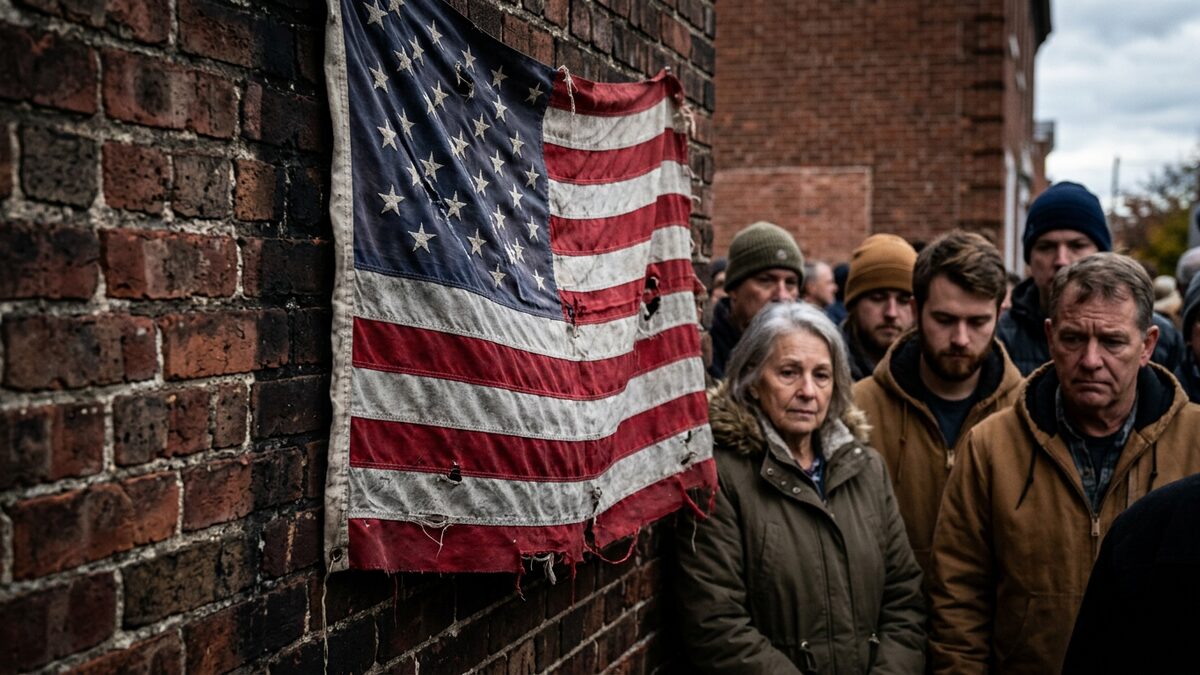
As the United States marks its 250th anniversary, the meaning of the national flag has become a contentious topic, with a significant portion of the population perceiving it as a symbol of division rather than unity. This evolving perspective highlights deeper cultural and political fractures, prompting a reevaluation of the flag’s role in representing shared values. The recent Reuters/Ipsos poll underscores these tensions, revealing sharply contrasting views that complicate traditional celebrations.
Key Takeaways
- Nearly 40% of Americans now see the national flag as a symbol of division rather than unity.
- Three-quarters of Democrats and half of Republicans feel the 250th anniversary events have become politically charged.
- Only 27% of Democrats plan to display the flag on July 4, compared to 64% of Republicans.
- The debate over the flag reflects deeper cultural and political fractures in the country.
As the United States marks its 250th anniversary, a recent poll reveals that nearly 40% of Americans now associate the national flag with division rather than unity—a stark contrast to its traditional symbolism. This shifting perception underscores a deepening debate over the meaning of the Stars and Stripes, as citizens grapple with whether the emblem of the nation’s founding ideals has become a “red flag” signaling cultural and political fractures.
Political Polarization and Flag Display Statistics
The Nation’s 250th Anniversary Sparks Debate Over American Flag is evident in the starkly divergent attitudes toward the flag’s display and the celebrations surrounding this milestone. A June 2026 Reuters/Ipsos poll highlights how politicized the anniversary has become: three-quarters of Democrats and half of Republicans believe the events have taken on a political tone that detracts from genuine national unity. This polarization is further reflected in flag-flying intentions for the July 4 celebrations, with only 27% of Democrats planning to display the U.S. flag outside their homes compared to 64% of Republicans.
Nearly 40% of Americans now associate the national flag with division rather than unity—a stark contrast to its traditional symbolism.
These figures correlate with a broader decline in national pride. The Public Religion Research Institute’s May 2026 survey found that just 51% of Americans felt “extremely or very proud” to be American—a significant drop from 82% in 2013. This waning pride corresponds with deep divisions over whether the country has fulfilled its founding ideals, revealing a nation conflicted about its identity as it commemorates a quarter millennium of independence.
President Trump’s Involvement and Controversial Measures
President Donald Trump’s prominent role in the Semiquincentennial celebrations has intensified the debate about the flag’s symbolism. Trump’s unveiling of a limited-edition passport featuring his image alongside the phrase “Welcome, but be good!” was seen by critics as politicizing what was intended to be a unifying national event. The administration’s decision to host a UFC event on the White House lawn further stoked controversy, fueling accusations that the anniversary was being co-opted for partisan spectacle rather than solemn reflection.
These actions extended to proposals such as featuring Trump’s likeness on a $250 bill, which opponents lambasted as a “corporate-funded, ideologically extreme spectacle.” Lisa Gilbert, co-president of Public Citizen, condemned these efforts as undermining the potential for unity, arguing that Trump and his allies have transformed the nation’s 250th anniversary into a divisive event. Such branding initiatives stray from the traditionally nonpartisan intent of the Semiquincentennial, amplifying the flag’s association with political identity rather than inclusive patriotism.
The Flag as a Symbol of Political Identity (“MAGA-Coded”)
The transformation of the Stars and Stripes into a symbol laden with political meaning has altered its reception across the ideological spectrum. For many Democrats, the American flag has become “too MAGA-coded” to be a neutral emblem of national pride. This perception has fostered ambivalence and even reluctance among some to publicly display the flag, fearing association with the political right and its cultural messaging.
This politicization complicates the flag’s traditional role as a unifying symbol. Instead of rallying diverse constituencies around shared values, the flag increasingly functions as a marker of political identity, reflecting and reinforcing the nation’s cultural and partisan divides. As the United States reflects on 250 years of history, the debate over the flag’s meaning reveals broader tensions about who Americans are and what the country stands for amid a fragmented political landscape.