

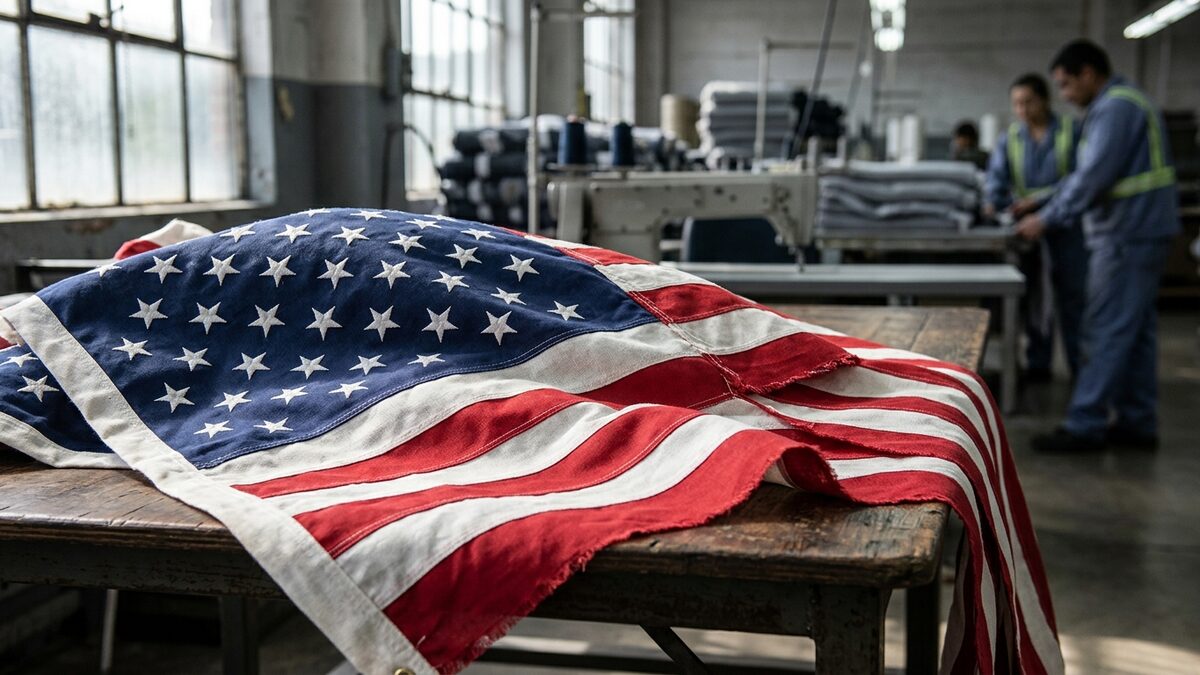
The Federal Trade Commission’s recent settlement addressing false “Made in USA” claims on American flags exposes a significant challenge in verifying product origins amid complex supply chains. With nearly 70 percent of flagged items containing Chinese-sourced materials, this enforcement action signals a rigorous crackdown on deceptive marketing practices. As the FTC expands its scrutiny to diverse product categories, questions arise about the broader implications for manufacturers, retailers, and consumer trust in domestic labeling.
Key Takeaways
- Nearly 70 percent of American flags labeled “Made in USA” contained materials sourced from China.
- The FTC settled claims against multiple companies for deceptive origin claims.
- The enforcement sweep targeted misleading “Made in USA” advertising across several product categories.
- The FTC aims to protect consumers and uphold domestic manufacturing standards.
Nearly 70 percent of American flags marketed as “Made in USA” were found to contain materials sourced from China, according to a recent Federal Trade Commission investigation. This widespread mislabeling prompted the FTC to settle claims against multiple manufacturers and retailers, aiming to crack down on deceptive practices that mislead consumers and undermine domestic manufacturing standards.
FTC Announces Enforcement Sweep Targeting “Made in USA” Claims
On April 14, 2026, the Federal Trade Commission announced a comprehensive enforcement sweep addressing deceptive “Made in USA” claims in product advertising and labeling. The sweep encompassed three law-enforcement actions involving companies selling American flags and flagpole display kits, entertainment systems, and footwear products. The FTC characterized these cases as part of its ongoing consumer protection efforts to combat unqualified and unsubstantiated origin claims, which can mislead consumers and distort competition.
Nearly 70 percent of American flags marketed as “Made in USA” were found to contain materials sourced from China, according to a recent Federal Trade Commission investigation.
Among the cases highlighted was a significant action targeting a retailer of American flags whose products were found to be sourced from China despite being marketed as domestically made. This action underscores the FTC’s commitment to verifying the authenticity of “Made in USA” labels and ensuring that manufacturers adhere to the agency’s strict guidelines governing origin claims.
The Flag Case: Parties and Allegations
The FTC complaint named two companies, Americana Liberty and Three Nations, along with their principals, for repeatedly advertising American flags, U.S. military flags, and patriotic flag display products as American-made. These claims appeared extensively across corporate websites, digital marketing channels, and other promotional materials. Americana Liberty is identified as a Fort Lauderdale, Florida-based company involved in these practices.
The products in question included not only flags but also flagpole display kits and related accessories sold under the contested origin claims. The FTC’s action targeted these representations as misleading, given the actual sourcing and manufacturing details uncovered during the investigation.
Sourcing Allegations Reveal Chinese Origin of Products
The FTC alleged that several products marketed as “Made in USA” were in fact wholly imported from China. Specifically, the complaint detailed that the Americana Flagpole Kit, as well as the Roosevelt and Washington brand products, were entirely manufactured and assembled in China. All components of the flagpole kits were produced overseas, contradicting the companies’ public claims of domestic origin.
Reuters reported that despite marketing the flags and related products as American-made, the companies relied heavily on China for sourcing, including manufacturing and assembly. This discrepancy formed the basis for the FTC’s allegations of deceptive advertising, ultimately leading to the settlement aimed at preventing further consumer confusion and protecting the integrity of “Made in USA” labels.