

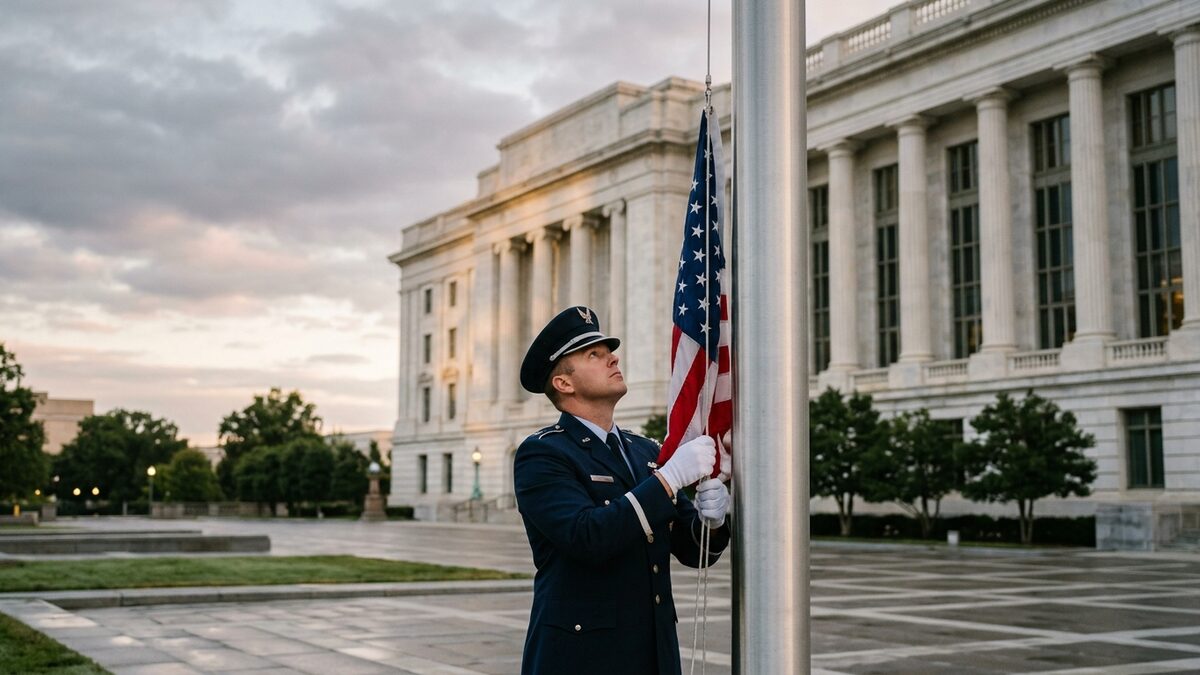
The recent presidential proclamation ordering flags to be flown at half-staff has reignited a complex conversation about flag etiquette and its role in expressing national mourning. This moment brings to light the delicate balance between adhering to established traditions and addressing contemporary sentiments, as well as the exclusive presidential authority that governs this solemn practice. Such discussions invite reflection on how symbols of respect evolve in a changing society.
Key Takeaways
- The tradition of flying flags at half-staff began after President Lincoln’s assassination in 1865.
- The President exclusively has the authority to order flags to be flown at half-staff through formal proclamations.
- Half-staff directives apply to federal properties nationwide, including states, territories, and possessions.
- Recent presidential proclamations have sparked renewed public debate on flag etiquette and its significance.
Since the tradition of flying flags at half-staff was first codified in the United States following President Lincoln’s assassination in 1865, this solemn gesture has served as a powerful symbol of national mourning and respect. In recent days, a presidential proclamation designating flags to be flown at half-staff has reignited public discourse on the protocols and significance of flag etiquette. This renewed conversation reflects ongoing debates about the balance between honoring collective grief and adhering to established customs rooted in American history.
The Authority and Scope of Presidential Half-Staff Proclamations
The President of the United States holds the exclusive authority to order flags flown at half-staff through formal proclamations. This power is codified in the Flag Code, which recognizes such directives as a means to honor principal government officials and other significant national circumstances. When a proclamation is issued, the directive applies to federal buildings, grounds, and naval vessels within the District of Columbia, across all states, territories, and possessions of the United States. Additionally, the President can extend this observance to U.S. embassies, legations, and military installations abroad, underscoring the gesture’s international diplomatic significance.
Since the tradition of flying flags at half-staff was first codified in the United States following President Lincoln’s assassination in 1865, this solemn gesture has served as a powerful symbol of national mourning and respect.
Presidential half-staff proclamations often follow the death of prominent public figures or others deemed worthy of national recognition. These proclamations can be layered or modified over time, as seen in recent White House orders that reference earlier proclamations, adjusting the flag status for specific days. This dynamic use of proclamations illustrates the flexibility within flag etiquette to accommodate evolving circumstances while maintaining respect for tradition.
Federal Guidelines on Mandatory Half-Staff Periods for Government Officials
Federal law delineates specific durations for mandatory half-staff observance tied to the death of key government figures. The death of a sitting or former President mandates a 30-day half-staff period beginning on the day of death. Other high-ranking officials such as the Vice President, Chief Justice, retired Chief Justice, and Speaker of the House prompt a 10-day observance. Meanwhile, Associate Justices of the Supreme Court, Cabinet members, former Vice Presidents, and congressional leaders trigger a half-staff display from the day of death until interment.
For members of Congress, including Senators, Representatives, Territorial Delegates, and the Resident Commissioner of Puerto Rico, the half-staff protocol is geographically more limited. Flags fly at half-staff in the Washington, D.C. area for two days starting on the day of death and in the official’s home state or district for a similar period. This graduated approach balances respect for the individual’s service with localized mourning customs, reflecting the nuanced application of flag etiquette across different levels of government.
Contemporary Debates on Flag Etiquette and National Mourning
The recent presidential proclamation has sparked renewed public discussion about the symbolism and implementation of flag etiquette at half-staff. Advocates emphasize the importance of this practice as a unifying expression of national grief and a tribute to public service. Critics, however, raise concerns about potential overuse or politicization of half-staff orders, arguing that frequent proclamations may dilute the gesture’s solemnity and historical significance.
This discourse also touches on broader questions about how the nation balances collective mourning with established customs. The evolving nature of presidential proclamations, including their timing and scope, highlights tensions between tradition and contemporary expectations. As the conversation continues, the rules governing flag etiquette remain a vital element in how the United States publicly commemorates loss and honors its leaders.