

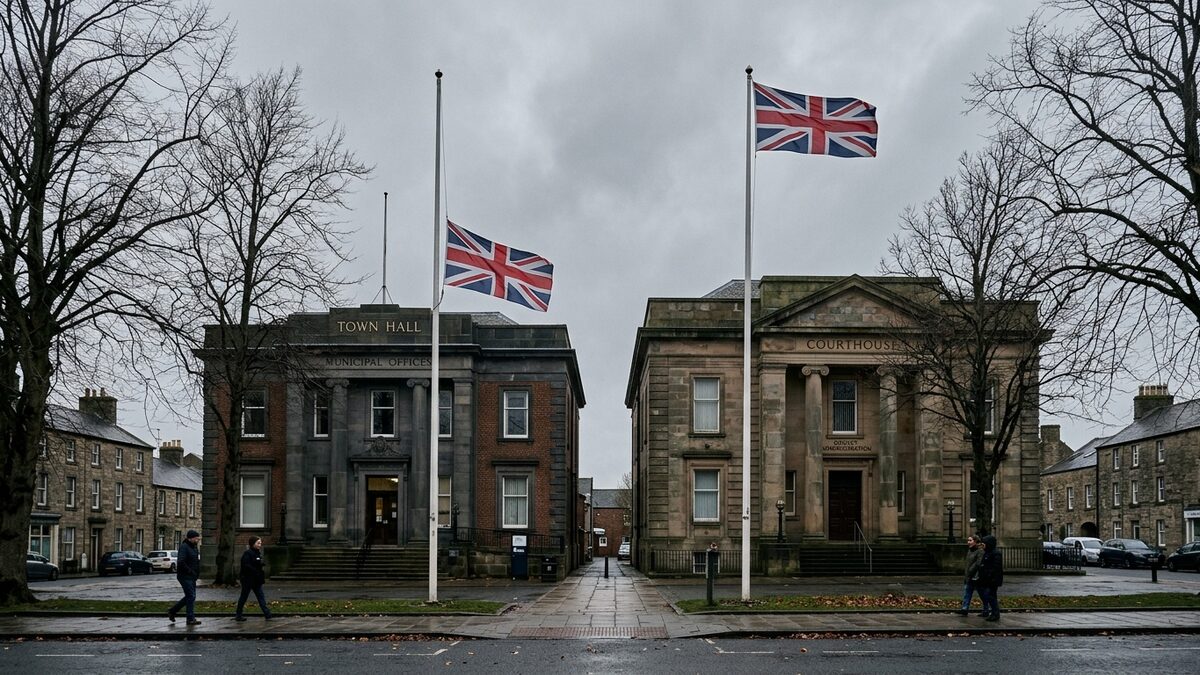
The recent national tragedies have sparked a notable rift among local governments regarding the protocol for flying flags at half-staff. While some jurisdictions act swiftly to lower flags as a symbol of collective mourning, others hesitate, citing procedural constraints or political considerations. This divergence underscores deeper tensions between public expressions of grief and the administrative frameworks that govern such gestures, raising questions about the balance of authority and unity in times of national sorrow.
Key Takeaways
- Local governments are divided on half-staff flag protocols following national tragedies.
- Some officials lower flags quickly as a symbol of unity, while others resist due to procedural or political reasons.
- The U.S. Flag Code limits half-staff orders to the President for federal properties and grants governors authority within their states.
- This division reflects a broader conflict between symbolic mourning and administrative discretion in public grief.
In the wake of recent national tragedies, local governments across the country have sharply diverged in their approaches to half-staff flag protocols, with some officials promptly lowering flags as a solemn gesture of unity, while others have resisted, citing procedural concerns or political implications. This stark division underscores a broader tension between symbolic acts of mourning and the administrative discretion that shapes public expressions of grief, revealing a fractured landscape where collective remembrance is no longer a uniform practice but a contested decision.
Federal Authority and Its Limitations in Half-Staff Flag Orders
The authority to order flags flown at half-staff is narrowly defined under the U.S. Flag Code, which grants the President exclusive power to mandate nationwide half-staff observances on federal property in response to national tragedies. This federal prerogative extends to mandatory mourning periods for certain high-ranking officials, such as a 30-day observance for a deceased President or former President, and 10 days for a Vice President, Chief Justice, or Speaker of the House. State governors hold parallel authority within their jurisdictions to order half-staff displays on state properties, primarily to honor state officials, military service members, or individuals who die in the line of duty. Similarly, the Mayor of the District of Columbia exercises comparable authority over D.C. flags. Proper flag etiquette requires that flags be first raised briskly to the peak before lowering to half-staff, and then raised again before being taken down at the end of the day. This federal and state framework establishes a clear chain of command but does not extend equivalent powers to local governments, contributing to inconsistent observances at the municipal level.
This stark division underscores a broader tension between symbolic acts of mourning and the administrative discretion that shapes public expressions of grief, revealing a fractured landscape where collective remembrance is no longer a uniform practice but a contested decision.
Local Governments’ Role and Legal Constraints in Half-Staff Observances
Local governments frequently support the symbolic gesture of lowering flags to half-staff following national tragedies, yet they lack formal authority under federal law to mandate such actions for the U.S. flag. The U.S. Flag Code explicitly restricts the power to order half-staff observances to the President and state governors, leaving local officials without binding jurisdiction over the national flag’s status. Nevertheless, local governments often establish their own policies regarding flags on municipal buildings, grounds, and facilities under their control. These policies can include directives to lower flags immediately upon verification of a death and maintain half-staff status through the day of funeral services. However, these local practices apply only to their own properties and do not carry the weight of federal or state proclamations. The absence of clear legal authority at the local level is a primary factor in the divergent responses observed across municipalities, as officials weigh procedural adherence against community expectations and political implications.
Recent State-Level Proclamations Illustrate Handling of Half-Staff Orders
Recent state-level proclamations highlight the common mechanisms through which half-staff flag orders are implemented during national tragedies. For instance, on September 11, 2026, Florida’s governor issued a proclamation directing U.S. and state flags to be flown at half-staff at all local and state buildings, installations, and grounds from sunrise to sunset. This directive exemplifies how governors use their authority to unify observance across jurisdictions within their states. Similarly, Colorado’s governor maintains the power to order the Colorado state flag lowered statewide in response to both state and national tragedies and may delegate this authority to other officials. These examples demonstrate that while state-level orders provide structured, official responses, local governments’ actions remain variable due to their limited legal authority and the discretion exercised by individual municipalities. This patchwork of observances reflects the ongoing debate and division among local governments regarding half-staff flag protocols for national tragedies.