

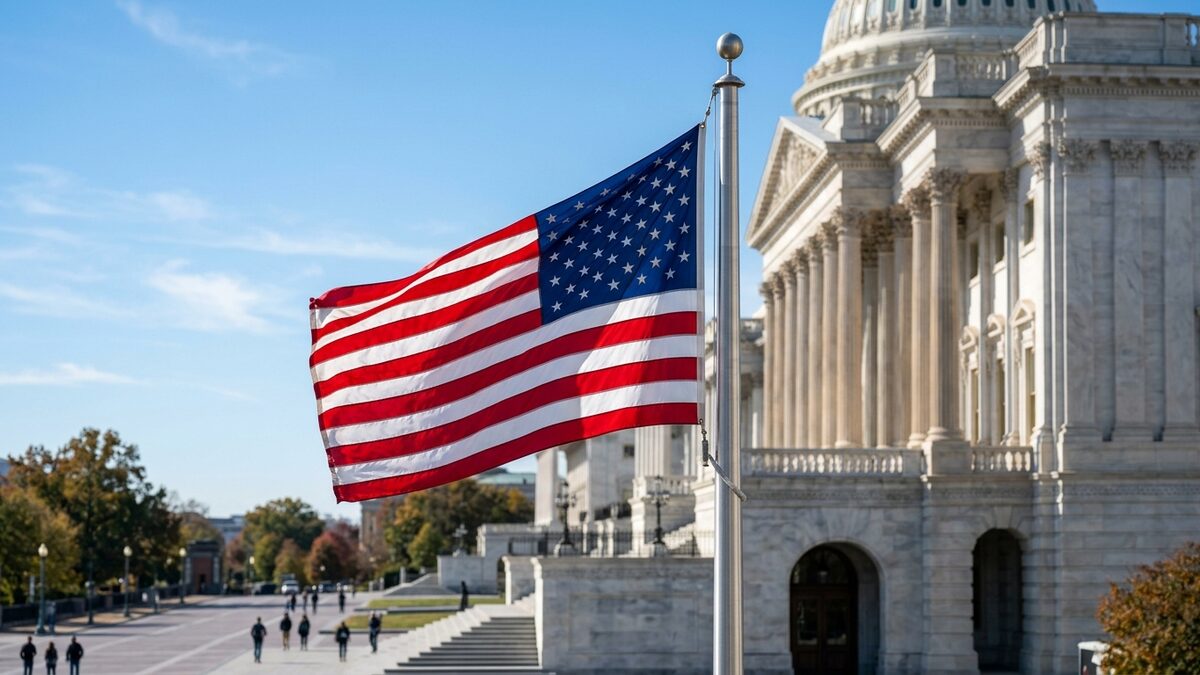
The State Department’s decision to update the American flag’s design has ignited a contentious debate in Washington, highlighting contrasting views on national identity and symbolism. While proponents see the redesign as a progressive reflection of contemporary American values, opponents warn of its potential to erode historic meaning and fuel divisive nationalism. This development raises important questions about the role of national symbols in diplomacy and the evolving narrative of American representation abroad.
Key Takeaways
- The State Department replaced its traditional display of foreign flags with a continuous row of American flags in its lobby.
- Supporters claim the new flag design represents a modern, inclusive vision of American identity.
- Critics argue the redesign risks undermining the flag’s historic meaning and promoting divisive nationalism.
- The change has sparked a broader debate about how the U.S. symbolizes its values on the international stage.
What message does a redesigned American flag convey when it waves over the halls of the State Department—patriotism renewed or nationalism repackaged? The recent overhaul of the flag’s design, intended to modernize the emblem of U.S. diplomacy, has ignited a fierce debate in Washington. Proponents argue it reflects a fresh, inclusive vision of America’s identity, while critics warn it risks diluting the symbol’s historic significance and stoking divisive sentiments. As the government embraces this visual transformation, the nation grapples with what it truly means to represent American values on the global stage.
Transformation of the State Department Lobby
The State Department’s long-standing display of foreign-country flags in its Washington lobby underwent a dramatic change in June 2026. Previously, the “Hall of Flags” showcased approximately 200 flags representing nations with which the United States maintains diplomatic relations, symbolizing the country’s global partnerships and multilateral engagement. This emblematic display was replaced by a continuous row of American flags stretching nearly 100 feet, punctuated by two notably large U.S. flags at each end of the corridor. The visual shift marked a decisive move away from international symbolism toward a singular emphasis on American identity.
The recent overhaul of the flag’s design, intended to modernize the emblem of U.S. diplomacy, has ignited a fierce debate in Washington.
Observers and media outlets have linked this redesign to a broader “America First” branding effort initiated during the Trump administration. The makeover aligns with a narrative seeking to foreground national sovereignty and pride, potentially recalibrating the diplomatic tone conveyed to foreign visitors and employees alike. The replacement of foreign flags with a uniform American flag display has become a physical manifestation of this ideological pivot within the corridors of U.S. diplomacy.
Official Justifications and Strategic Messaging
State Department officials have articulated the redesign as a strategic effort to standardize and consolidate the visual representation of American diplomacy worldwide. Darren Beattie, the acting undersecretary for public diplomacy, emphasized that the new flag display aims to “recenter and re-anchor” the department’s visual identity around the American flag, thereby enhancing recognition of U.S. initiatives abroad. According to Beattie, the redesign facilitates “consistent branding” across all U.S. offices, embassies, bureaus, and programs, streamlining the presentation of American diplomatic efforts under a unified emblem.
While the department framed the change as a branding initiative devoid of adversarial intent toward foreign countries, it explicitly ties the display to an “America First” agenda. Compliance with this new branding standard was set for October 1, 2025, illustrating a deliberate timeline for institutional adoption. The administration’s messaging underscores a desire to visually communicate American contributions distinctly and assertively on the global stage, reflecting a recalibrated diplomatic posture.
Political and Public Reactions to the Flag Overhaul
The timing and scale of the flag replacement—coinciding with the lead-up to the U.S. 250th anniversary celebrations—have intensified the political discourse surrounding the makeover. Although intended to commemorate the nation’s milestone, the removal of foreign flags from the lobby sparked controversy, with critics arguing that it undermines the spirit of international cooperation and mutual respect traditionally embodied by the display. The lobby’s prior configuration symbolized the United States’ complex network of diplomatic relationships, and its removal has been seen by some as an exclusionary gesture.
Debate over the State Department American-Flag makeover remains active in Washington, extending beyond initial news cycles into sustained political discussions. Commentators and policymakers continue to assess whether the redesign represents a reaffirmation of patriotism or a troubling slide toward nationalism that risks alienating allies. The controversy reveals deep divisions over how best to visually and symbolically represent American values and interests in a globalized world, underscoring the potent role of national symbols in diplomatic identity.