

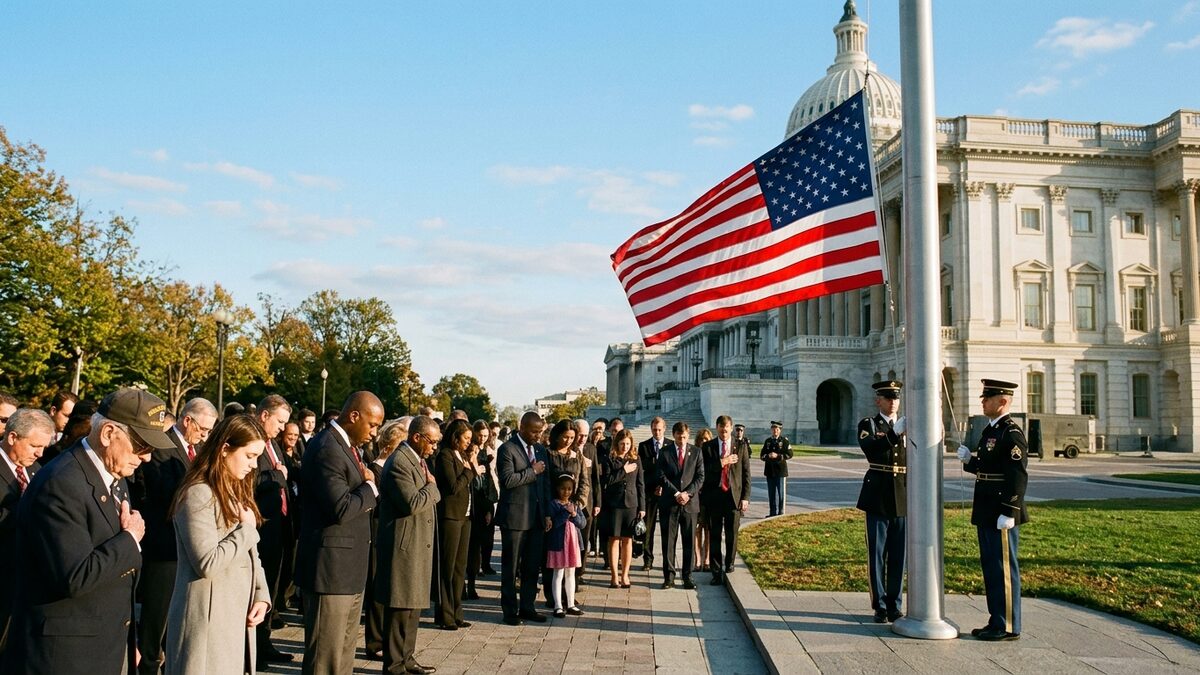
The recent official proclamation renewing attention to half-staff flag etiquette underscores its vital role in national mourning and unity. Understanding the precise protocol for this solemn gesture not only honors important occasions but also reinforces collective respect. As this directive gains prominence, it invites a closer examination of how proper flag observance reflects shared values and national sentiment during times of grief.
Key Takeaways
- The official proclamation has renewed national awareness of half-staff flag etiquette.
- Flying the flag at half-staff symbolizes respect, mourning, and unity.
- Federal rules dictate the precise protocol for raising and lowering the flag at half-staff.
- Proper observance of these guidelines honors the flag with dignity during solemn occasions.
What does it truly mean when the national flag is flown at half-staff, and why does proper observance of this protocol matter now more than ever? The recent official proclamation has brought renewed attention to the significance of half-staff flag etiquette, underscoring its role in national mourning, respect, and unity. This directive serves as a timely reminder for all citizens to honor the flag with dignity and adhere to established guidelines during periods of solemn recognition.
Understanding Half-Staff in U.S. Flag Etiquette
The term “half-staff” refers to the official position of the U.S. flag when flown at a level halfway between the top and bottom of the flagpole. This position is a mark of respect or mourning and is governed by federal flag rules applicable to all U.S. government buildings, grounds, and naval vessels within the District of Columbia and across the nation and its territories. Proper protocol requires the flag to be first hoisted briskly to the peak and then lowered to half-staff. At the end of the day, before the flag is lowered, it must be raised again to the peak. This procedure ensures the flag is displayed with the utmost dignity during solemn occasions and reflects the nation’s collective respect and remembrance.
This directive serves as a timely reminder for all citizens to honor the flag with dignity and adhere to established guidelines during periods of solemn recognition.
Presidential Authority and Proclamations
The President of the United States holds the authority to order the flag to be flown at half-staff through formal proclamations. These proclamations typically honor distinguished public officials and other designated individuals deemed significant to the nation. For instance, the White House issued an official proclamation on September 10, 2025, directing the flag to be displayed at half-staff until sunset on September 14, 2025, in honor of Charlie Kirk. Such proclamations are carefully tracked by official state guidance to ensure public buildings observe the directive appropriately. Historically and legally, these half-staff orders are time-limited and event-specific, underscoring their purpose to recognize moments of national significance or mourning.
Federal Statutory Rules Under 4 U.S.C. § 7
Federal statute 4 U.S.C. § 7 codifies specific rules governing half-staff displays based on the death of certain public officials. The flag is mandated to be flown at half-staff for 30 days following the death of a President or former President of the United States. In cases involving the death of a Vice President, Chief Justice, retired Chief Justice, or Speaker of the House, the flag is flown at half-staff for 10 days. For an Associate Justice of the Supreme Court, Cabinet secretary, former Vice President, or state Governor, the flag is flown from the time of death until interment. Members of Congress receive recognition through half-staff display on the day of death and the following day. Additionally, for Senators, Representatives, Territorial Delegates, or Resident Commissioners, half-staff observance is honored in the District of Columbia and the individual’s home jurisdiction. These statutory provisions ensure uniformity and respect in flag etiquette across all levels of government.