

The recent diplomatic summons by Iceland following a social media post by former President Donald Trump underscores the fragile nature of international relations in the digital age. The controversial image, which incorporated Iceland within a U.S. flag map, has raised critical questions about national sovereignty and the responsibilities of public figures on global platforms. This incident invites a closer examination of how political expression intersects with diplomatic protocol and international respect.
Key Takeaways
- Iceland summoned the U.S. ambassador to express concern over a map posted by Trump that included Iceland as U.S. territory.
- Trump's social media post showed a North American map overlaid with the American flag, labeling all regions as the United States.
- The image was interpreted by Icelandic officials as dismissive of their national sovereignty and territorial integrity.
- The incident highlights increasing diplomatic sensitivities around territorial claims and political messaging.
What message does a map of the United States adorned with its national flag convey when shared by a prominent political figure, and why has it prompted Iceland to summon the U.S. ambassador for clarification? The unusual move underscores rising diplomatic sensitivities following former President Donald Trump’s social media post, which Icelandic officials interpreted as potentially dismissive of their sovereignty and territorial integrity.
Triggering Event: Controversial Map Image Posted by Trump
On Monday, September 8, 2026, former President Donald Trump posted an image on his social media platform, Truth Social, showing a map of North America entirely overlaid with the American flag. The map notably included Iceland, Greenland, Canada, Mexico, Central America, and the Caribbean, with the entire landmass labeled “United States of America.” The image lacked any accompanying explanation or context, prompting widespread media coverage and speculation about its intent.
The depiction of Iceland as part of the United States was particularly provocative, given the island nation’s independent status and established sovereignty.
Observers highlighted the post’s timing, noting its connection to Trump’s earlier territorial rhetoric concerning Greenland and Canada. The depiction of Iceland as part of the United States was particularly provocative, given the island nation’s independent status and established sovereignty. This portrayal was perceived by many as a symbolic assertion of American territorial claims beyond recognized borders.
Iceland’s Diplomatic Response and Formal Protest
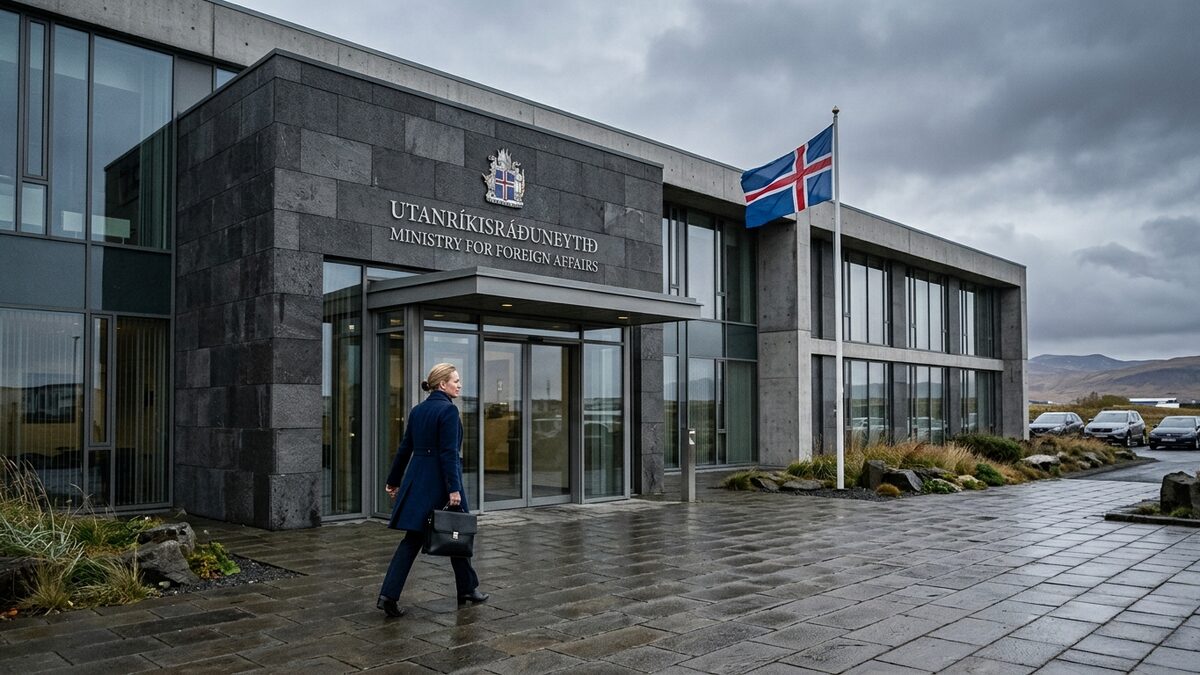
In response to the image, Iceland’s Foreign Minister Þorgerður Katrín Gunnarsdóttir summoned U.S. Ambassador Billy Long for a formal diplomatic meeting on the same day of the post. The Icelandic foreign ministry described the social media image as “completely inappropriate” and a serious breach of diplomatic decorum. The meeting was characterized as a protest against what Iceland viewed as a dismissive and insulting gesture toward its sovereignty.
At a press conference held the following day, Gunnarsdóttir labeled the message “absurd” and emphasized that it was insulting not only to Icelanders but also to Greenlanders and Canadians. She stressed the importance of respecting national sovereignty and dismissed any notion that the post was humorous or benign. The diplomatic action reflected Iceland’s intent to assert its territorial integrity firmly and to signal its displeasure to the United States government.
U.S. Officials and Lack of Immediate Official Response
Billy Long, who had formally assumed his role as U.S. ambassador to Iceland only the previous month, was the official summoned to address Iceland’s concerns. Despite the summons, the American Embassy in Reykjavik declined to comment publicly on the image or the diplomatic protest. Similarly, the White House did not offer an immediate response to requests for comment on the incident.
The absence of an official explanation or apology from U.S. authorities left the matter unresolved in public discourse. Meanwhile, Trump was identified as the originator of the post on Truth Social, reinforcing the direct link between the former president’s actions and the diplomatic tensions. The episode highlights ongoing sensitivities over territorial representation and the diplomatic impact of social media posts by prominent figures.