

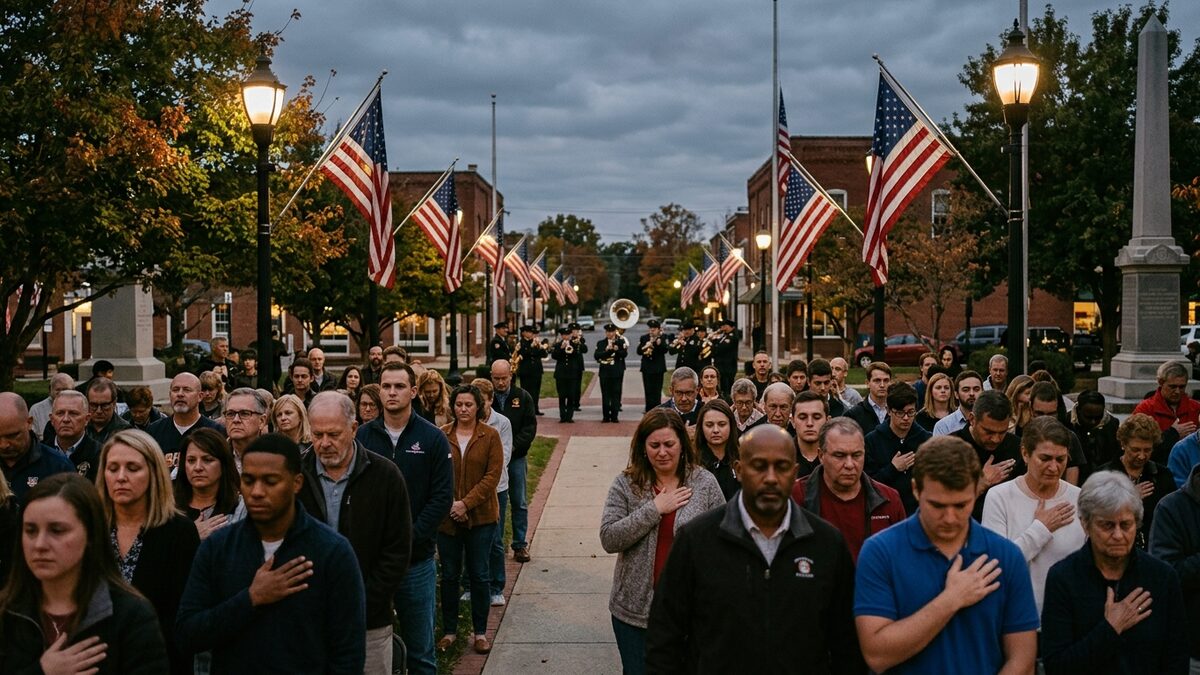
Communities nationwide unite in a poignant display of patriotism as American flags fly at half-staff, embodying a shared sense of mourning and respect. This solemn gesture, governed by the U.S. Flag Code, underscores the importance of tradition and protocol during moments of national reflection. Exploring how these observances foster collective unity reveals deeper insights into the role of symbolic acts in public grieving and remembrance.
Key Takeaways
- American flags were flown at half-staff nationwide as a sign of collective mourning and respect.
- Federal law outlines precise protocols for raising and lowering flags at half-staff to maintain solemnity.
- The United States Flag Code requires flags to be first raised to the peak before lowering to half-staff.
- On Memorial Day, flags are flown at half-staff only until noon, then raised to full staff.
In towns and cities across the nation, the sight of American flags hanging solemnly at half-staff stirred a quiet reverence in the air, their muted colors fluttering gently against a gray sky. The soft rustle of fabric blended with the hushed murmurs of gathered crowds, while the faint scent of fresh-cut grass mingled with the crisp breeze. This collective display of patriotism, marked by bowed heads and reflective silence, created a poignant atmosphere that resonated deeply within each community.
Federal Guidelines Define Half-Staff Flag Protocols
U.S. federal law establishes specific protocols for flying the American flag at half-staff, emphasizing both respect and order in these public displays of mourning. According to the United States Flag Code, the flag must first be hoisted briskly to the peak of the staff before being lowered ceremoniously to half-staff. At the conclusion of the day’s observance, the flag is raised again to the peak before being taken down. This procedure underscores the solemnity and dignity associated with half-staff displays. Memorial Day carries a unique rule: flags are flown at half-staff only until noon, when they are then raised to full staff for the remainder of the day.
This collective display of patriotism, marked by bowed heads and reflective silence, created a poignant atmosphere that resonated deeply within each community.
The President of the United States holds the authority to order flags to half-staff nationwide to honor principal government figures, mark official occasions, or respond to national tragedies. This practice serves as a public symbol of mourning and respect, signaling a collective moment of reflection across the nation. However, local governments generally lack the legal authority to mandate half-staff status for U.S. flags independently, as noted by the Kentucky League of Cities, which clarifies that such orders are typically reserved for federal or state executives.
Communities Voluntarily Follow Official Half-Staff Orders
While the authority to order flags at half-staff rests primarily with the President and state governors, communities across the country often voluntarily participate in these patriotic tributes. Private citizens, local businesses, and municipal organizations commonly lower their flags in response to presidential proclamations or following local tragedies. This voluntary participation fosters unity and shared mourning within neighborhoods and towns.
State governors have the power to order flags lowered within their jurisdictions, particularly to honor state officials or service members who have died while on active duty. Similarly, the Mayor of the District of Columbia exercises this authority within the capital. Although municipal governments cannot officially mandate half-staff observances, many encourage residents and local entities to join in these displays as a visible sign of respect and remembrance. Such grassroots participation strengthens communal bonds and reflects a shared commitment to honoring those who have served or sacrificed.
Half-Staff Flags Mark Major National Observances
Half-staff flag displays remain closely tied to significant national days of remembrance, reinforcing their role in collective American memory. Peace Officers Memorial Day, observed annually on May 15, calls for flags to be flown at half-staff throughout the day unless it coincides with Armed Forces Day. Patriot Day, September 11, requires half-staff observances nationwide to honor the victims of the terrorist attacks in 2001. December 7, Pearl Harbor Remembrance Day, also mandates this solemn display to commemorate those lost in the 1941 attack.
Other memorial observances, such as the National Fallen Firefighters Memorial, incorporate half-staff flags as part of their traditions to honor fallen heroes. The National Flag Foundation identifies half-staff displays as a standard and powerful expression of mourning and respect during these solemn occasions. Through these designated days, communities unite in patriotic tribute, reinforcing the enduring significance of the American flag as a symbol of national resilience and shared values.