

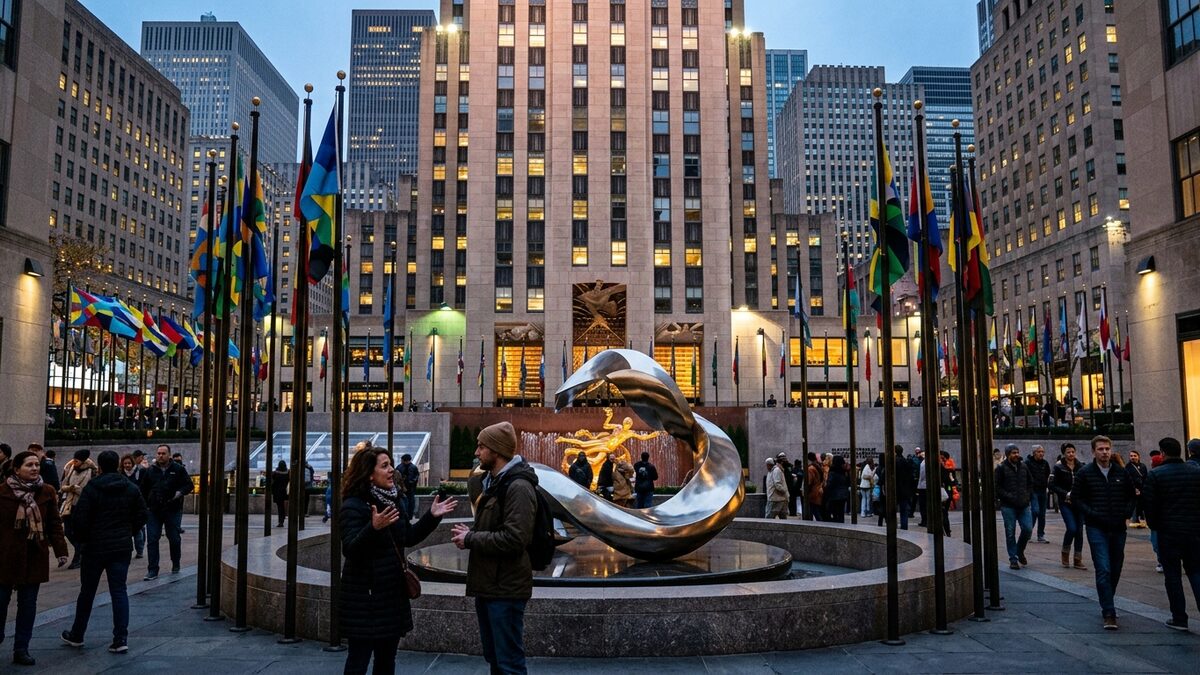
Rockefeller Center’s proposal to replace its iconic American flag display with a contemporary art installation for the nation’s 250th anniversary has ignited a passionate debate. The contrast between the traditional stars and stripes and the avant-garde design raises complex questions about the evolving expression of patriotism and the balance between honoring heritage and embracing innovation. This controversy invites a deeper examination of how cultural symbols adapt in a rapidly changing society.
Key Takeaways
- Rockefeller Center plans to replace its traditional American flag display with a contemporary art installation for its 250th anniversary.
- The new installation, titled United Flags of Fashion, will feature over 120 custom flags designed by American fashion designers.
- The project aims to celebrate innovation and reinterpretation rather than maintaining the classic stars and stripes.
- This change has sparked debate about balancing heritage with modern cultural expression.
Rockefeller Center, long celebrated for its iconic American flag display that annually affirms national pride, now stands at the center of a contentious debate as plans emerge to replace this familiar symbol with a contemporary art installation for its 250th anniversary. The steadfast rows of stars and stripes, emblematic of continuity and patriotism, clash starkly with the proposed avant-garde design, which champions innovation and reinterpretation. This juxtaposition between enduring tradition and bold transformation has ignited fervent discussions about the very meaning of heritage in a rapidly evolving cultural landscape.
The United Flags of Fashion: A Bold Reimagining
For the Rockefeller Center 250th Anniversary display, the traditional arrangement of American flags will give way to an ambitious public art project titled United Flags of Fashion. Scheduled to run from July 27 through September 4, 2026, this installation commemorates the semiquincentennial of the Declaration of Independence by presenting over 120 custom flags designed by leading American fashion designers. Rather than replicating the familiar stars and stripes, these flags reinterpret the official banners of U.S. states, territories, and Washington, D.C. through the lens of contemporary fashion and design, offering a vibrant and diverse visual dialogue on national identity.
This juxtaposition between enduring tradition and bold transformation has ignited fervent discussions about the very meaning of heritage in a rapidly evolving cultural landscape.
Presented collaboratively by the Council of Fashion Designers of America (CFDA), Vogue, Rockefeller Center, and America250, the project aims to spotlight American creativity and innovation as integral to the nation’s heritage. Each flag reflects the designer’s unique perspective on their state’s symbolism, merging civic pride with artistic experimentation. This creative approach underscores the evolving nature of American culture as a dynamic and multifaceted entity rather than a static tradition confined to familiar iconography.
Transforming Tradition: From Civic Symbolism to Artistic Exhibition
The installation marks a significant departure from the Rockefeller Center’s customary display of state flags that frame the famed rink, a setup long regarded as a solemn emblem of patriotism and unity. For the duration of the anniversary celebration, the traditional flags will be supplanted by the fashion-inspired banners in a temporary but visually striking takeover. This shift recontextualizes the space from a conventional civic memorial to an expansive fashion-and-art exhibition, challenging viewers to reconsider the meanings embedded in public symbols.
While the ephemeral nature of the installation is emphasized by organizers, the decision to replace the standard flags during this milestone event has provoked debate. Critics lament the loss of a familiar patriotic tableau that many associate with national continuity, arguing that the substitution risks diluting the gravitas of the occasion. Proponents, however, contend that the project revitalizes the narrative of American identity by embracing diversity and innovation, suggesting that tradition itself is not static but subject to reinterpretation in a changing cultural landscape.
Stakeholders and Perspectives in the Debate
The Rockefeller Center 250th Anniversary display plan is spearheaded by influential cultural institutions and figures, reflecting a convergence of fashion, art, and national commemoration. The CFDA and Vogue play pivotal roles in organizing and presenting the project, bringing the fashion industry’s creative energies into public discourse. America250, the national partner for the semiquincentennial, lends an official imprimatur to the endeavor, while Rockefeller Center provides the iconic venue that anchors the display in the heart of Manhattan.
The unveiling attracted prominent designers such as Calvin Klein, Coach, Michael Kors, Thom Browne, Tommy Hilfiger, Tory Burch, and Willy Chavarria, underscoring the fashion world’s investment in shaping cultural memory. Organizers frame the installation as a tribute to American fashion and design, celebrating the country’s creative diversity as a foundational element of its identity. Yet, the initiative’s critics view this fusion of fashion and patriotism as a contentious redefinition of national symbols, reflecting broader tensions over how heritage should be represented in public spaces amid shifting social and cultural paradigms.