

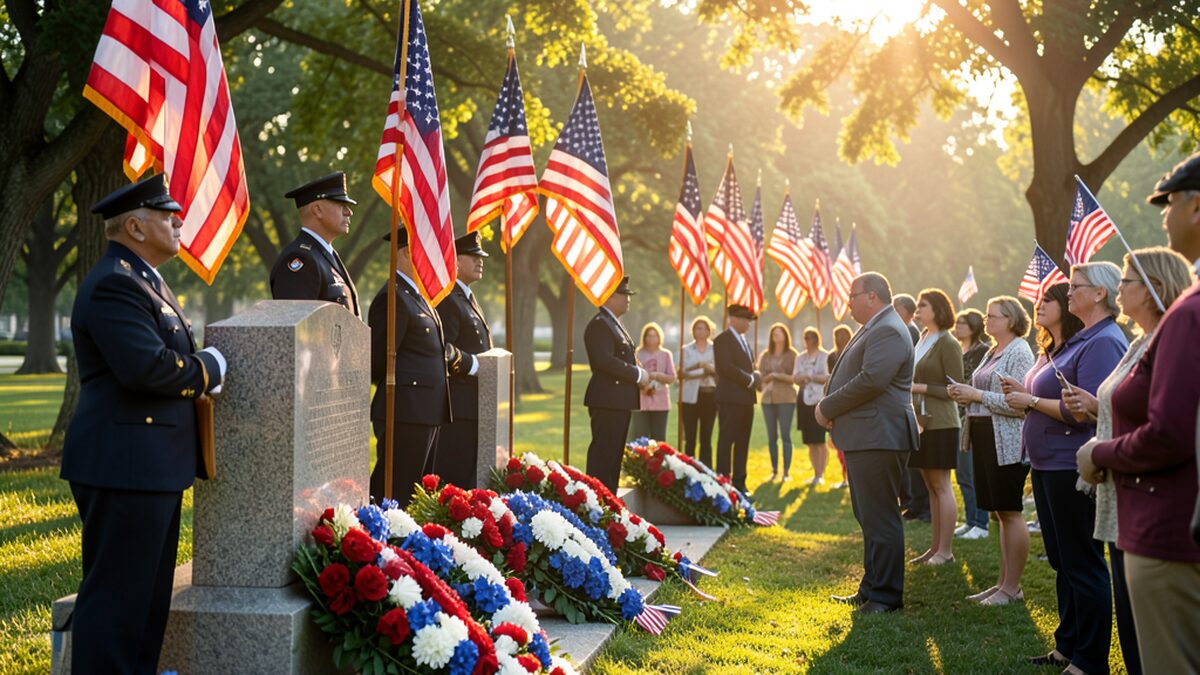
As Memorial Day approaches on May 25, 2026, communities across the nation are broadening their commemorative efforts with enhanced flag ceremonies and wreath-laying events. These observances underscore a profound dedication to honoring the sacrifices of U.S. military personnel who have died in service. By distinguishing Memorial Day’s unique focus from other military holidays, this expansion reflects a deepening collective resolve to preserve the memory of those who gave their lives for the country.
Key Takeaways
- Memorial Day commemorates U.S. military personnel who died in service, distinct from Veterans Day.
- Communities nationwide are expanding flag ceremonies and wreath-laying events to honor fallen soldiers.
- The National Moment of Remembrance at 3:00 p.m. local time calls for a pause to reflect on the cost of freedom.
- Federal agencies, including the Department of Veterans Affairs, coordinate official Memorial Day events at national cemeteries.
As Memorial Day traces its origins to post-Civil War commemorations honoring fallen soldiers, communities across the nation are renewing this solemn tradition with expanded flag ceremonies and wreath-laying events. These observances serve as a poignant reminder of the sacrifices made by service members throughout American history, reinforcing a collective commitment to remembrance and respect in towns and cities preparing to gather in tribute this year.
Federal Memorial Day Observance and Official Purpose
Memorial Day, observed federally on Monday, May 25, 2026, is a solemn occasion dedicated to honoring U.S. military personnel who died while serving their country. Unlike Veterans Day, which pays tribute to all who have served in the armed forces, Memorial Day specifically commemorates those who made the ultimate sacrifice. The holiday’s official observance includes the National Moment of Remembrance at 3:00 p.m. local time, a call for citizens to pause and reflect on the cost of freedom.
Memorial Day, observed federally on Monday, May 25, 2026, is a solemn occasion dedicated to honoring U.S. military personnel who died while serving their country.
The Department of Veterans Affairs, along with other federal agencies, plays a central role in coordinating Memorial Day events at national cemeteries. These observances follow a structured program of remembrance designed to emphasize respect and gratitude for fallen service members. Through these carefully planned activities, the federal government encourages communities to engage in meaningful acts of tribute and reflection.
Arlington National Cemetery and Major National Ceremonies
Arlington National Cemetery remains the focal point of Memorial Day ceremonies nationwide. On May 25, 2026, the cemetery will host its traditional wreath-laying at the Tomb of the Unknown Soldier, a powerful symbol honoring unidentified fallen troops from past conflicts. The event draws thousands of visitors and garners national television coverage, underscoring its significance as a centerpiece of Memorial Day commemorations.
The Arlington ceremony features remarks from military leaders and national officials, providing context and solemnity to the day’s proceedings. These speeches highlight the enduring legacy of sacrifice and the ongoing commitment to honor those who have died in service. The Arlington event is part of a larger federal remembrance schedule coordinated in Washington, D.C., linking local and national efforts in a unified act of tribute.
National Cemetery Ceremony Network Across the United States
Beyond Arlington, the National Cemetery Administration organizes Memorial Day ceremonies at numerous VA national cemeteries across the country, ensuring that remembrance is accessible to communities nationwide. On May 26, 2026, for example, ceremonies are scheduled at locations such as the National Memorial Cemetery of the Pacific, Snake River Canyon National Cemetery, and Abraham Lincoln National Cemetery. Additional sites include Jefferson Barracks, Yellowstone, and Chattanooga National Cemeteries.
These regional observances follow a standardized format featuring military honors, ceremonial music, and opportunities for public attendance. Scheduled in local time zones, the ceremonies provide consistency while respecting the unique character of each community. This network of events strengthens the nationwide commitment to honoring the fallen, reinforcing the shared values of respect and remembrance across diverse regions.