

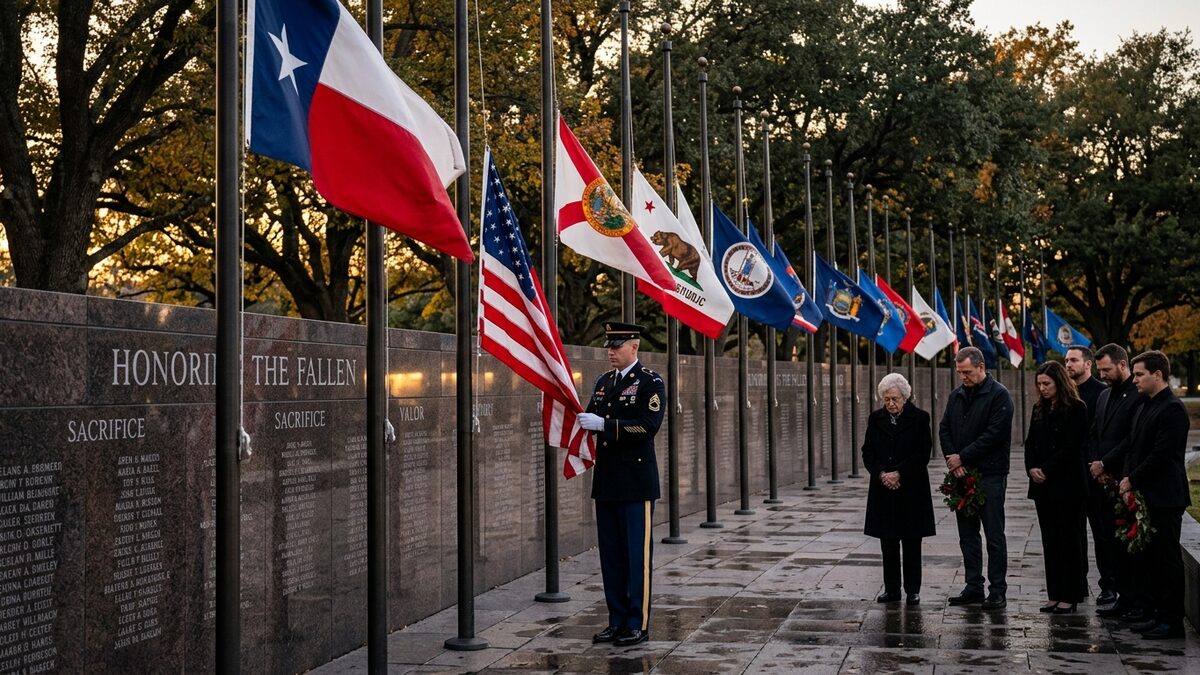
Recent revisions to flag code guidance have prompted states to reconsider their approaches to memorial and mourning observances, reflecting a nuanced effort to honor collective grief while upholding flag etiquette. These shifts underscore an emerging dialogue on how symbolic acts can unify communities during periods of national sorrow, revealing the intricate balance between tradition and evolving public sentiment. Exploring these changes offers insight into the broader implications for state and national identity.
Key Takeaways
- Updated flag code guidance is prompting states to revise their memorial and mourning flag protocols.
- States aim to honor collective grief while respecting national flag etiquette.
- Federal Flag Code sets specific half-staff durations for various officials' deaths.
- New state measures reflect a balance between solemn remembrance and uniform flag display.
How should a state honor its collective grief while maintaining respect for its national symbols? Recent updates to flag code guidance have prompted a wave of new legislative and administrative measures across multiple states, redefining protocols for memorial and mourning tributes. These changes reflect a deliberate effort to balance solemn remembrance with uniform flag etiquette, underscoring the evolving role of symbolic gestures in public mourning.
Federal Flag Code as the Foundation for Mourning Protocols
The United States Flag Code establishes a comprehensive baseline for the display of the national flag during periods of mourning. It specifies that flags are to be flown at half-staff for 30 days following the death of a sitting or former president. For other high-ranking officials, including the Vice President, Chief Justice, retired Chief Justice, and Speaker of the House, the flag is to remain at half-staff for 10 days. The Flag Code further mandates that flags be lowered from the day of death until interment for Associate Justices, Cabinet secretaries, former Vice Presidents, and state governors. Additionally, it requires half-staff display on the day of death and the subsequent day for Members of Congress. These provisions form the legal framework that state officials rely upon when issuing mourning orders, ensuring consistency and respect across jurisdictions.
These changes reflect a deliberate effort to balance solemn remembrance with uniform flag etiquette, underscoring the evolving role of symbolic gestures in public mourning.
Pennsylvania’s Use of Flag Code Language in 2026 Mourning Orders
In 2026, Pennsylvania demonstrated a strict adherence to Flag Code guidance in its official mourning protocols. Governor Josh Shapiro issued multiple orders directing flags to half-staff that explicitly referenced compliance with the United States Flag Code. For instance, following the line-of-duty death of Pennsylvania State Trooper Michael Pahira, the Governor ordered flags to be lowered on July 1, with the directive specifying that flags remain at half-staff until the interment date on July 8. Additionally, Pennsylvania’s Memorial Day order initiated the lowering of flags at sunrise on May 25, with the return to full-staff mandated at noon. These actions underscore Pennsylvania’s commitment to aligning state mourning practices with federal flag etiquette, thereby reinforcing the solemnity of official tributes.
Mississippi and Delaware Advance Mourning Tributes Through Flag Orders
Other states have similarly enacted mourning protocols grounded in the Flag Code framework. Mississippi’s Governor Tate Reeves declared a day of official mourning on April 10, 2026, for Jackson County Deputy Michael “Mike” Leroy Jimerson, ordering flags at half-staff statewide from sunrise to sunset. The order encompassed all public buildings and grounds, exemplifying a coordinated memorial response to a line-of-duty death. Likewise, Delaware’s Governor Matt Meyer issued a half-staff order for Memorial Day 2026, applying it to all state buildings and facilities. Flags were directed to be lowered at sunrise on May 25 and to return to full-staff at noon, reflecting established Flag Code practices for national remembrance. These state-level actions illustrate how updated flag code guidance spurs consistent and respectful memorial and mourning tributes across diverse jurisdictions.